Monday, April 4, 2016

Doorways in the SandDoorways in the Sand by Roger Zelazny
My rating: 5 of 5 stars

What the heck! I'm not an acrophiliac perpetual-student with a penchant for pilfering sentient stones, but after re-reading this book, I kinda want to be. :)

If managing to avoid getting a degree in 13 years while still maintaining a full course load can be considered a special kind of genius, then our MC has it, but wait! This is just the beginning.

Zelazny writes beautifully, with curious and curiouser language, puns, poetry, and slight perfidy, if the last line in the novel is anything to judge the rest by. Just what am I supposed to make of that, eh? (view spoiler)

This is a re-read, and probably one of the most enjoyable re-reads I've had in a very long time, with a few very notable exceptions. For one, I never actually intended to re-read this one, and it's only thanks to a few bookish friends here that I ever felt the need.

And I am very thankful. :)

The one thing that strikes me the most about this novel is the perfect knife-balance of absurdity. The knife might be a fool's knife masquerading as a knight's, but the knife cuts a fine story. Don't let the telepathic donkeys and overgrown houseplants fool you. We live in a wild, wild universe, and humanity is about crawl out of our own muck to take part in a tale as old as Time.

That's right. The hunt for lost jewelry. And yet, here's the funny part: no women characters are taking part in said hunt. Absurd! Right?

During the first half of the novel, I kept saying to myself that this novel would be a fantastic humor-laden modern SF, including major building-climbing stunts, kangaroos with wire-rimmed glasses, wombats, and raisins, the most nutritious whiskey drinks ever devised, and looking through a mirrored universe. (I decline to subscribe to the MC's point of view that it is merely *he* that has been flipped. After all, I started seeing things reversed, too, so perhaps the machine is leaking a bit, eh?)

The plot wrap-up wasn't entirely to my liking, for the most part, but it grew into a more subtle and thoughtful end that had lots of consequences for the rest of us, so I was eventually quite satisfied.

I can't believe that goofball actually got a job. Perhaps, with a little luck, he'll eventually climb that tallest building, but I'm not going to hold my breath. The jury's still out on us. :)

This is classic SF at its best. There's nothing out-of-date about it. I think it has held up extremely well and despite its clever cliffhangers with every chapter and Mirror's Edge kind of action escapades, this is a novel that is intelligent right down to it's sentence-core. Entertaining as hell AND it makes you think and scratch your head and go Aha! with it's mini-puzzles.

I totally recommend it for anyone. I always loved the author and it is just dawning on me that perhaps I really out to rediscover the man. Fantastic read!


View all my reviews

Sunday, April 3, 2016

The Big TimeThe Big Time by Fritz Leiber
My rating: 4 of 5 stars

1958 Hugo winner, and what an interesting surprise!

This is the Cure for the Common (modern) SF. Tired of the old rehashing of drawn-out plots and over-deep character explorations full of pathos, pathos, and more pathos? Then pick this one up. See the universes without being a Space Opera, enjoy the perks of touching all time without a time lord in sight. Drink your favorite alcohol and listen to your neighbor wax poetic. And oh yeah, don't get caught in the war across all Time. (The title of the book is kinda crappy. It's actually referring to the field of battle.)

So, this novel is about as far as you can get from modern SF.
It's laden heavily with a ton of interesting ideas and alternate reality sets and times thrown at you without explanation or depth, having a very quick progression of plot and and a stage as big as all time and all the spaces of an infinity of universes.

If that doesn't blow your mind, then good.

We're hanging out with the entertainment crew that services the space-time warriors that snipe big changes through history, a neutral zone that caters to the Snakes (one time-traveling faction) and the Spiders (another time traveling faction.) It's chaos, to say the least. Is it war, or is it really something else? No spoilers.

There's plenty to think about, of course. Wanna invert a huge pulsating brain or name drop the Comandant of Toronto or murder baby Einstein? It's fun as hell.

I got the impression that Heinlein's "All You Zombies" was a better Time Travel story, with more and deeper exploration of plot and character, but I'm also pretty sure that the two authors were playing with each other. Heinlein's story came out one year after this one won its Hugo. Fun fact: the 2014 movie Predestination was based on "All You Zombies".

BUT, Leiber's novel was NOT about going deep, but going really, really wide in an attempt to tackle a really big idea. What idea? Oh no. This is an easy and quick book, people. Enjoy it for yourself. :)

We zip here and there and everywhere, like a knee-jerk reaction to all the Golden-Age SF that had just come before. But Leiber takes all the old square-jawed heroes with all their can-do attitudes and amped them up to mind-blowing proportions, giving them an unlimited landscape, and then, for our "heroes" we're thrown into the minds of "normals" caught in the middle of it all.

Why is this the opposite of modern SF? Because it doesn't slow down to explore any single plotline or character in detail. So much happens so quickly that it's a delight and a blur and I feel like I need to sit down and deconstruct the living hell out of every paragraph and chortle at the wordplay and the thousands of alternate reality implications. There's SO MANY. :) It's like falling into Wonka's candy store.

Zip, zip, zip, zip. It kept a smile on my face and a snicker in my laugh for practically the entire novel. Even the late reveals reverse the fact that endless (literally) war is not quite as dark as we first thought. That immediately turns this novel into a comedy by the old traditions, and I feel like I've been needing something very light-hearted for a while, so this definitely fits the bill.

If you're getting the deep desire to have an idea-packed and an amazingly quick read, I'd absolutely recommend this novel. Fritz Leiber has such a light and clever voice! :)

View all my reviews
Where Late the Sweet Birds SangWhere Late the Sweet Birds Sang by Kate Wilhelm
My rating: 4 of 5 stars

1977 Hugo winner for best novel.

We've got some serious competition out here for best dystopia, but what about the old SF classics that decided to do it first, and often better, than all the modern trash out here?

Sure, there's a seriously 70's vibe here, man, with all the deep concerns for community versus individuality, but it's not like we've really outgrown the issues. You can read the novel as a deep condemnation for conformity and group-think and the logical extremes of extroversion and as a reader identify with the introverted outcasts and their iconoclast talents, even if such things are considered, among most, as a euthanizable offence. Sound familiar, modern YA dystopia readers?

Well this isn't a YA novel, either. It starts out as a pretty horrific descent into chaos as the world turns sterile and plagues decimate the population, but fortunately, for the deeply optimistic and appreciated optimism of SF of the day, science comes to the rescue... with Clones! Cool, right?

Just think, an Army of Clones! I mean, it's such a classic idea, right? I mean, first Star Wars did it, and then everyone just... ooh... wait... I think I'm mixing up cause and effect here... Still, this novel isn't a war novel. If anything, it's a bit humorous watching a nature boy lead a bunch of cloned children through the forest to go on raids. Sure, the world has gone to hell, but Science Wins. I can't fault the optimism, and all of these characters are very well drawn.

We've taken free love into whole new territories, decided that art therapy can have seriously bad repercussions, and that individuals really out to be allowed to be, you know, individual. :) But I did find it just as fascinating to see how their society dealt with Extreme Communalism. :) Scary, too. The breeding farms were major-ick.

I would have been killed as a kid as a nonfunctional unit. :) They'd have expressed sympathy and all, but it doesn't change the fact that I'd be pasteurized.

This may not be my favorite SF novel ever, mind you, but I really enjoyed it. It didn't decide to be very dark and wallow in all the things that modern dystopias pride themselves on... like complete and utter hopelessness. :)

Definitely a worthwhile read.

View all my reviews

Saturday, April 2, 2016

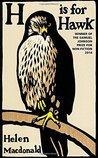
H is for HawkH is for Hawk by Helen Macdonald
My rating: 4 of 5 stars

I generally don't do memoirs, but not because I'm a snob for everything else. I don't do them because I'm not really interested. A bit more oddly, I'm only mildly interested in hawks and falcons. I certainly never went out of my way to learn more after reading Stephen King's The Gunslinger, so why am I going out of my way now?

Mostly, it's because of the writing. I heard from several sources that it was good and I stayed as a low blip in my radar for quite some time, but then, finally Ilana tipped it over the edge for me. :) There's some really good biography stuff about T. H. White in here, and after having just read and enjoyed The Once and Future King, I didn't need that much further encouragement. :)

So, thoughts?

Helen Macdonald knows how to tell a story of herself. She managed to bring in personal tragedy in such a way that brought out real emotion, creatively, without dragging anyone down with her. In fact, it was the goshawk and the mirroring with this delightful bird that helped her work through so much. It's more a tale of becoming a partner and discovering the real nature of reality, and that includes both life and death, profoundly. In a more timid hand, the writing could have gone astray, or get bogged down as a scholarly work on the history of hawking, but no, it always remained personal with tons of interesting anecdotes.

So how does it relate to T. H. White? He failed in his own attempts to train or enter a partnership with is own goshawk, and it was entirely due to his relationship with the world and his own homosexuality. Helen Macdonald uses him and his writing, his history, and his particulars of psychology as a wonderful foil against her own journey. The mirrors were multilayered, with Bird versus Macdonald, and White versus Macdonald, and the mix was damn effective.

It also helped that her use of language was always enjoyable, reliable, and insightful.

I'm very happy to have gotten around to this, and I must thank Ilana for pushing me over the edge. Thanks!

I must never forget that I must spread my own wings and try new things or I, too, will stagnate. :)


View all my reviews

Friday, April 1, 2016

Dissent (The Nexus, #1)Dissent by Thomas Olbert
My rating: 3 of 5 stars

I'm very conflicted about this novel.

On the one hand, it does descriptions very well, with clear prose and some extremely evocative visual imagery. This is true all the way through space battles, ground battles with tanks or bows, and even a wonderful fight with a wolf. I never once got bogged down in bad prose. Everything from these through the dialog ran smooth.

The novel is obviously full to the brim with emotion, too.

I can't say that there's an awful lot of different kinds of emotion, but it is full of emotion.

And that's part of where the novel began to lose me.

Let me back up.

The ideas are pretty complex and wide from the very opening exposition, reminding me a bit of Stephen Baxter's Raft in a way, punching hole through the universe to remake another to fit themselves, traversing galaxies, being masters of both space and time and even by the chapter titles, we're intended to get the idea that this whole civilization we're focused on is at best a failed experiment or at worst a joke. With all this power and ability, being able to rewrite time and effect and reverse entropy, I was thrilled that I might get an idea-heavy exploration of what it means to be a god. (It might not work so well on a character level or even just to make the reader care, but I was willing to suspend judgment.)

So what happened? The first half of the book can be broken down into very easy segments of violence, sex, a little more violence, violent sex, and just for good measure, some more violence. It doesn't always have to be fighting, of course. We have lots of anger, mistrust, hate sex, and later we have economic chicanery, corrupt politics, virtual slavery, and excommunication. See a common theme?

So from page 3 or 4, I kept asking myself a single question that practically ruined my enjoyment of this entire novel. It was "Why?"

I mean, the imagery and emotions were always consistently high, there was lots of fighting and sex. What's not to love?

Um. Story. There was no drill-down into the reasons why these godlike beings had or needed war. I should also point out that every person is female, too. Why? IDFK. But yeah, that's right, all that sex is between women. And then there's the much later reason given about resources. And then I'm like, isn't space Big? Aren't there, like, a Lot of stars and planets and resources, like, everywhere? And especially if you have godlike powers, wouldn't problems like keeping your crops healthy be a no-brainer?

And then it dawned on me by chapter 16 that there's ANOTHER group that has these godlike powers. Oooooohhh, okay... but these peeps don't do much except sometimes reverse life and death on planets that don't really have anything to do with the people we haven't really gotten to know yet because they're only fighting and screwing. Um. Okay.

Pointer: Never assume that a kick or a punch or a blaster firing is a substitute for character choices and actual plot. Cool scenes can't make up for a lack of overarching story, either. I felt like I was in one of those soap operas from Fahrenheit 451, where everything was overly dramatic, but there was no substance. Later on we get into farming and politics and a slight bit of bonding between some characters, but long before that point, I was far out of the story. Perhaps a bit of these late "reasons" might have grounded me in the novel early as a poor substitute for the truly interesting characters I wished I had gotten, but it was all way too late.

So in case you're wondering why I give a middle rating instead of a 1 star, it's because I really did think the descriptions were cool and sharp and very readable. The evocation of emotions were strong, too, or at least between lust and anger.

If this had actually been a SF b-movie, perhaps I could have turned off my brain and enjoyed the ride and ignored the lack of substance, like so many stupid movies with great special effects and pathos, but it wasn't. This was a novel.

I apologize to the author. I did like portions of this. Thank you for the review copy, and I'm sorry that I didn't enjoy the tale more.

View all my reviews
To Your Scattered Bodies Go (Riverworld, #1)To Your Scattered Bodies Go by Philip José Farmer
My rating: 4 of 5 stars

It's 1972 and the Hugos just named this one best novel, and why?

Because it's actually 2016 and this novel has just been optioned by both HBO AND Showtime for an ongoing series noted mostly for it's all nude cast, all the time, celebrities and historical personages all coming back to their most perfect forms, and, of course, senseless war and violence. (When they're not expounding on philosophy, of course, because philosophy and religion always leads to a cave-man's club and a bunch of grabbing of blond hair.)

Don't get me wrong. I'm actually having a great time with this book. I can ignore the constant nudity, because, after all, the main characters are Sir Richard Francis Burton and Hermann Goering. What I'm most fascinated by is the deeper questions.

Like Why? Come on, SF, you know you want to ask it. Why are we having the tale of the bodily resurrection in an ostensibly heaven-like world complete with Holy Grails for every single person who had ever lived? And why does chewing gum bring out the very worst in us all? And why do we always, always, always have to degenerate to our very worst selves whenever the outcome just doesn't matter? Huh? Why?

Tune in for the next novel! Maybe? I don't know! This is my first Farmer, and it's definitely not going to be my last. I'm getting great vibes off of this. It's too graphic for Netflix, but I think it has practically unlimited possible milage for HBO and Showtime. We can do ANYTHING! Murders don't even count. That eviscerated person will just pop up somewhere else along the nearly infinite world of rivers among yet another random population of... ANYONE WHO EVER LIVED.

Okay... why aren't All the Authors Who Ever Lived turning this idea into a franchise and filling all our bookshelves with better versions of what I just read? The potential is glorious. I loved the conversations between all these famous people. They have the most respectful and interesting ways of saying WTF. :)

Beyond just a couple of dumb blond preferences, I think this novel has held up extraordinarily well over the years. I think it could gain a whole new audience in today's readership, especially in the realm of slash fiction, fan fiction, and whatever it is that Stephanie Meyer and E.L. James does.


View all my reviews
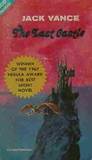
The Last CastleThe Last Castle by Jack Vance
My rating: 4 of 5 stars

This novellete won the Hugo in '67 and the Nebular in '66, and it happens to be my very first reading of Jack Vance.

I expected nothing other than Silver Age SF, under-topics that were very important to the day, and what might seem to be very old tropes. So what did I get?

Silver Age SF, a fairly deeply buried reflection on a topic of "Doing The Job Yourself"... as opposed letting another class, be it race, socioeconomic, or sex, to do it for you. You know, American Work Ethic, and why the hell is everyone hiring maids to do all their housework, damnit? And of course we get the standard SF tropes that all you fans love, such as highly stratified societies and a huge War With Robots. Yeah! And don't forget castles and neat twists that make them seem almost like metaphors for tightly controlled generational ships.

The afterward tells us that he's bringing in some of the surface layers of Japanese Shogunate verbal niceties, too, so definitely keep an eye out in the read for that. :)

There's a ton of great ideas flitting and flying about here, and some of them have 2 foot wingspans even if they're craven cowards and don't want to dominate the text. Which is a shame, because the juxtaposition of all these tropes and a few more I haven't even mentioned is what makes this story a truly cool one.

Jack Vance was one hell of a talesmith, and I am thrilled enough to start building a collection right next to my tiny but growing shelf of Poul Anderson. Sweet!

Oh, and for those purists that hate to read old SF because of all the sexism, prejudice, and other cringeworthy social artifacts, don't worry yourselves with this one. It's pretty damn clean and interesting without being a misanthrope.

(view spoiler) :)

View all my reviews

Grilled Armageddon by Dakota Krout My rating: 4 of 5 stars This feels like a grimdark LitRPG to me. The system is totally out to get ever...